01
Choose a drone
Start with the kind of flight, camera work or practice you actually want to do.
Find a droneA practical field guide for UK drone owners
Choose it for the way you want to fly. Set it up well. Learn the craft. Keep it ready. Use UK guidance when it changes the plan.
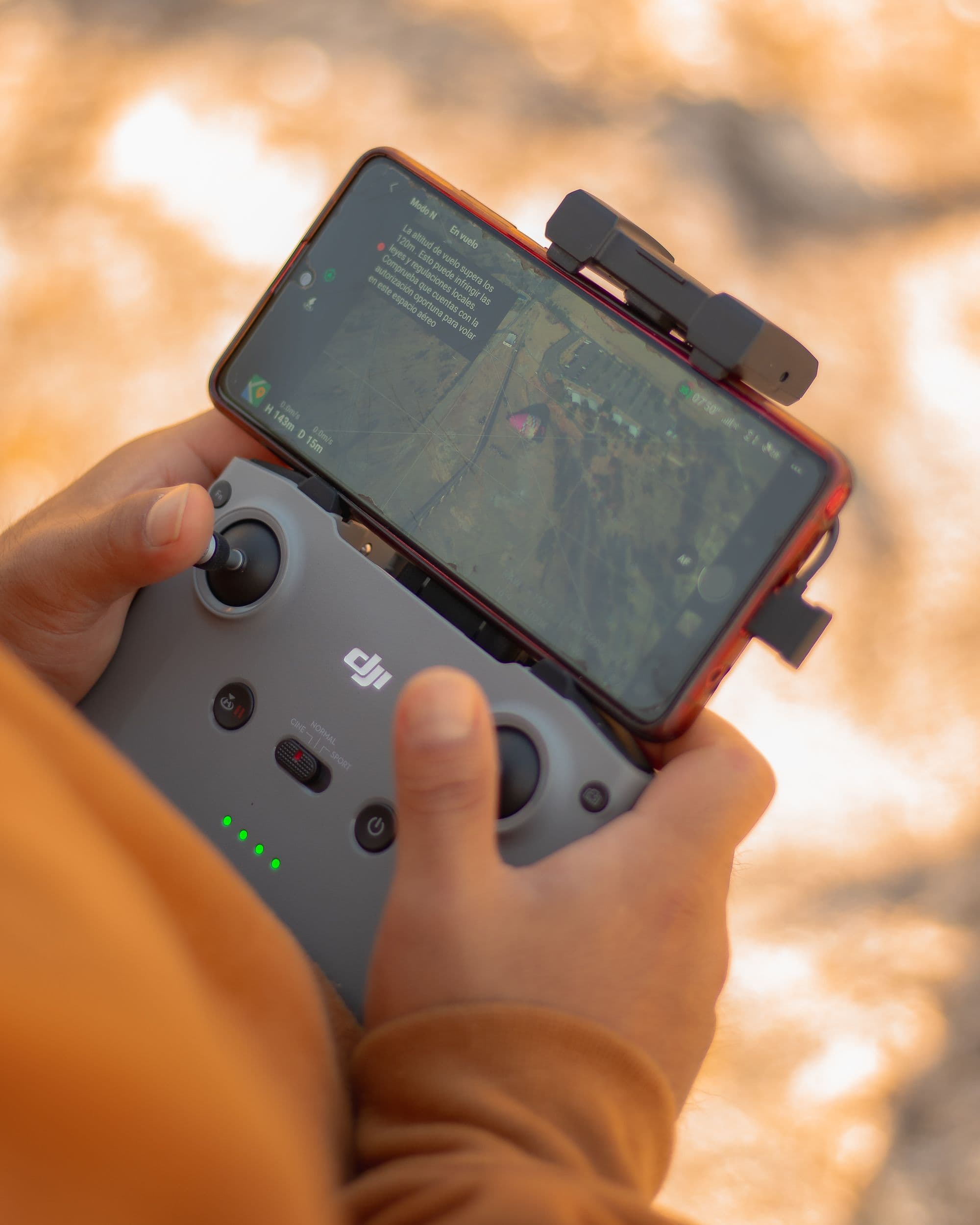
Photo: Carlos Reyes / Pexels
A user-first journey
The useful order is simple: choose for your real use, prepare the actual kit, practise with care, and bring in the current official route where it matters.
01
Start with the kind of flight, camera work or practice you actually want to do.
Find a drone02
Use the exact aircraft, kit and location to make the first week calm and useful.
Start your first week03
Build camera and flight habits around a shot, a place and current conditions.
Learn to fly04
Keep charging, storage, updates and repairs part of the ownership routine.
Explore ownership05
Use CAA information when the aircraft, operation or place changes the answer.
Open UK guidanceA better first week
Manufacturer-source shortlist
Our selection is based on manufacturer information and a practical ownership brief. We have not flight-tested these aircraft or verified UK retailer stock.
First camera drones
A first camera-drone buyer who wants 4K video up to 60fps and a conventional controller workflow. DJI specifies a 1/2-inch, 48MP sensor and approximately 249g standard take-off weight. Compare the complete UK kit before treating it as an alternative to an older entry-level Mini.
The trade-off: DJI’s comparison table indicates no internal-storage allocation; confirm a compatible microSD card for the actual kit. DJI lists 36 minutes maximum flight time under controlled test conditions; this is not a guaranteed filming window or a substitute for a return reserve.
Check the exact configuration →Travel and video drones
A creator with a shot plan that needs two distinct perspectives: a 24mm-equivalent wide camera with a 1-inch, 50MP sensor and a 70mm-equivalent medium tele camera with a 1/1.3-inch, 48MP sensor. The longer lens changes framing without relying solely on digital cropping.
The trade-off: DJI specifies 724g take-off weight, so this is a materially larger ownership and operating choice than a compact Mini. Its 42GB internal storage is useful capacity, but the recording, offload and backup workflow still needs planning. The advertised 45-minute maximum flight time is a controlled-test result, not guaranteed shoot time.
Check the exact configuration →First camera drones
A buyer concentrating on deliberate photographs and portrait-format clips rather than a tracking-heavy workflow. DJI specifies a 1/1.3-inch sensor, 4K video up to 30fps and a gimbal that physically rotates for portrait capture.
The trade-off: The sensing system is downward vision for positioning, rather than forward or all-round obstacle detection. The standard configured weight is 248g; the Plus battery changes it to about 290g. Its 38-minute maximum flight time is a controlled-test result, not a promise of usable recording time.
Check the exact configuration →Travel and video drones
A compact-drone creator who needs physical portrait rotation and more frame-rate options than the Mini 3. DJI specifies a 1/1.3-inch, 48MP sensor, 4K up to 60fps and 4K/100fps slow motion, plus omnidirectional binocular sensing.
The trade-off: The 2GB internal storage is small enough that a compatible card and regular offload still matter. Sensing depends on lighting, surface detail and speed; it does not guarantee clearance. DJI lists under 249g with the standard battery, while the Plus battery exceeds 249g and is not sold in Europe.
Check the exact configuration →First camera drones
A personal creator comparing a guarded-propeller format with a camera-drone workflow. DJI specifies a 1/1.3-inch sensor, a three-axis mechanical gimbal, 4K up to 60fps and 4K/100fps recording for slow motion.
The trade-off: Its sensing is forward 3D infrared plus downward vision and infrared, rather than all-round obstacle detection. DJI says intelligent functions, including Subject Tracking, do not support obstacle avoidance. Vertical video tops out at 2.7K/30fps, so it does not provide the same portrait output as a physically rotating Mini gimbal. The 31-minute maximum flight time is a controlled-test result.
Check the exact configuration →Travel and video drones
A personal creator seeking short self-following action clips rather than choosing chiefly for a conventional aerial-camera workflow. The current UK manufacturer comparison lists a 1/1.3-inch sensor, 8K/30fps maximum video, approximately 192g with battery and 64GB internal storage with SD support.
The trade-off: The manufacturer lists 16 minutes maximum flight time and explicitly says the X1 PROMAX is not waterproof. More recording resolution also means more storage and editing decisions; 8K alone does not establish a better shot or make a wet-weather outing suitable.
Check the exact configuration →Compare the usable kit cost and the footage you want to keep before choosing a model. A second battery or a larger sensor is valuable only when it solves your actual problem.
Find a drone
33 reviewed drone routes and 24 supporting kit records. Each route shows its source-review date; overdue shopping links are paused.
Source-reviewed drone reference · last recorded review 2026-11-01
WHO IT SUITS
A first camera-drone buyer who wants 4K video up to 60fps and a conventional controller workflow. DJI specifies a 1/2-inch, 48MP sensor and approximately 249g standard take-off weight. Compare the complete UK kit before treating it as an alternative to an older entry-level Mini.
MEANINGFUL TRADE-OFF
DJI’s comparison table indicates no internal-storage allocation; confirm a compatible microSD card for the actual kit. DJI lists 36 minutes maximum flight time under controlled test conditions; this is not a guaranteed filming window or a substitute for a return reserve.
CHECK BEFORE BUYING
Manufacturer information is available above. A matching UK retailer listing has not been verified, so we do not attach a shopping link. A failed buying-link check never opens a replacement merchant; review this page before trying again.
Limit: This is a manufacturer-source review, not a hands-on test, UK stock confirmation, price comparison, performance guarantee or flight permission.
For company teams
Bring a content, property or evidence-capture brief to the product choice. The practical business hub keeps procurement, care, media and the current CAA route in the same conversation.
Watch before you fly
Manufacturer videos can show a product. They cannot settle the rules, location or flight decision for you.
OFFICIAL DJI FILM
DJI product film for a travel and solo-camera-work comparison. Exact video title and publisher checked at the source.
Open on YouTubeOFFICIAL DJI FILM
DJI product film to compare a compact camera-drone format with first-week needs. Exact video title and publisher checked at the source.
Open on YouTubeOFFICIAL DJI FILM
DJI film for an owner considering an FPV-style upgrade path. Exact video title and publisher checked at the source.
Open on YouTubeOFFICIAL DJI FILM
DJI product film for comparing a compact, protected format with a first-week plan. Exact video title and publisher checked at the source.
Open on YouTubeOFFICIAL DJI FILM
DJI product film for a creator considering a flagship camera system. Exact video title and publisher checked at the source.
Open on YouTubeA deeper comparison, when it helps
WhatDrone UK helps you work out what to own and what to check. Once you have that context, UK Shortlists offers a clearly disclosed, deeper comparison route. You can always stay here to access the practical guidance and official sources.
The important limit
Before every flight, check current CAA information, airspace and flight-restriction details, landowner permission, weather and local conditions. These are live questions, not a once-and-done product feature.
Go to the official Drone Code ↗